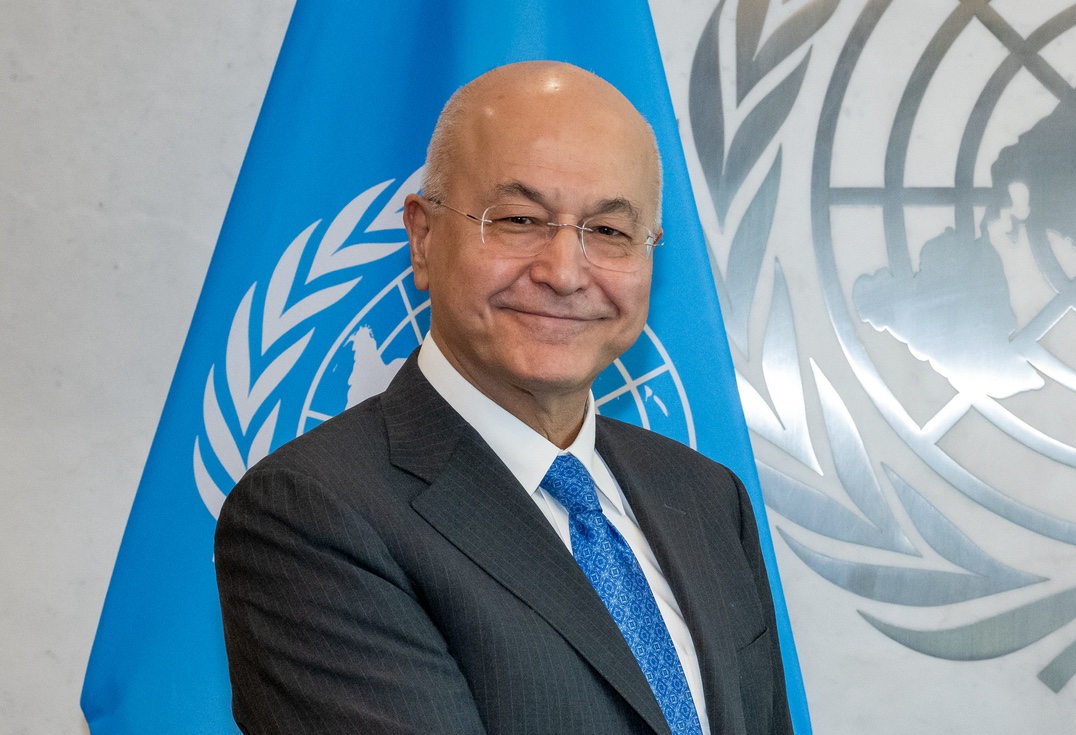
More than 900,000 Sudanese refugees in eastern Chad face worsening conditions as funding gaps strain humanitarian support, the UN refugee chief has warned.
Visiting the region, Barham Salih described Sudan’s conflict as a humanitarian calamity and urged the international community to urgently support Chad’s refugee response and help displaced families rebuild their lives with dignity.
During his first official overseas visit since taking office, Salih travelled to eastern Chad, where he met Sudanese refugee families who had fled recent fighting in Darfur.
Many told him they had been displaced several times since the conflict began, describing years of violence and serious human rights abuses.
He spoke with women who had been raped and with people whose parents had been killed, arriving in Chad with little more than what they could carry.
“What is unfolding in Sudan is a humanitarian calamity of overwhelming scale. Chad’s generous welcome of refugees is a powerful act of solidarity,” Salih said on Friday.
“By keeping its borders open and protecting refugees, Chad is offering people safety, dignity and legal status. These are the foundations on which solutions can be built so refugees can start to rebuild their lives and contribute to society.”
Since April 2023, more than 900,000 Sudanese refugees have crossed into eastern Chad, with new arrivals continuing to arrive daily.
Sudan has become the world’s largest displacement crisis, with around 12 million people forced from their homes, including more than 4.3 million refugees across neighbouring countries.
Salih urged the international community to intensify efforts to bring peace to Sudan, saying a political solution was essential to allow refugees to eventually return home.
Until then, he warned, host countries such as Chad needed sustained global backing to cope with the scale of the emergency.
UNHCR continues to lead life saving assistance in refugee settlements across eastern Chad, but Salih said conditions remain extremely difficult.
Funding shortages have left many families without adequate shelter, while water supplies fall far below emergency standards.
Overcrowded sanitation facilities are increasing health risks, and high levels of trauma persist among refugees who have experienced repeated violence.
Mental health services reach only a small proportion of those in need, while many children remain out of school. Salih warned that without additional resources, the humanitarian response would continue to fall short of minimum standards.
“People in eastern Chad are in acute need, but due to a lack of funds, the assistance provided is nowhere near the minimum level required,” he said.
“The responsibility to host these refugees has fallen on Chad, but other countries must rally to support it, it cannot be expected to shoulder such responsibility alone.”
He added that while refugees are safe from immediate danger, protection alone is not enough. “Refugees here may be safe from immediate harm, but they need opportunities through education, work and livelihoods to build a future,” Salih said.
During his visit, Salih toured programmes aimed at promoting self reliance for refugees and host communities.
In Iridimi, he met refugee learners gaining digital and language skills to support their education and access the job market.
In Farchana, he visited shared market gardens where refugees and local communities grow and sell crops together.
In Abeche, he spoke with lawyers, doctors and teachers displaced from Sudan who are now able to practise their professions in Chad.
Despite economic hardship and environmental pressures, Chad continues to uphold international protection standards and provide access to asylum at scale.
Salih met President Mahamat Idriss Déby Itno in N’Djamena and reaffirmed UNHCR’s commitment to working alongside the government to support refugees and host communities.
He also reiterated UNHCR’s readiness to help implement the Integrated Settlement Approach, which aims to expand services and economic opportunities for both refugees and host populations.
“Visiting Chad and Kenya this last week, both countries clearly demonstrate how, with sustained international support, inclusive policies can move us from responding to displacement emergencies towards providing solutions,” Salih said.
“When refugees are protected and included, they can rebuild their lives and contribute to the societies that host them.”































Comments
Sign in with Google to comment, reply, and like comments.
Continue with Google